As an Amazon Associate, we earn from qualifying purchases. Some links on this site are affiliate links at no extra cost to you. Our recommendations are based on thorough research and editorial judgment.

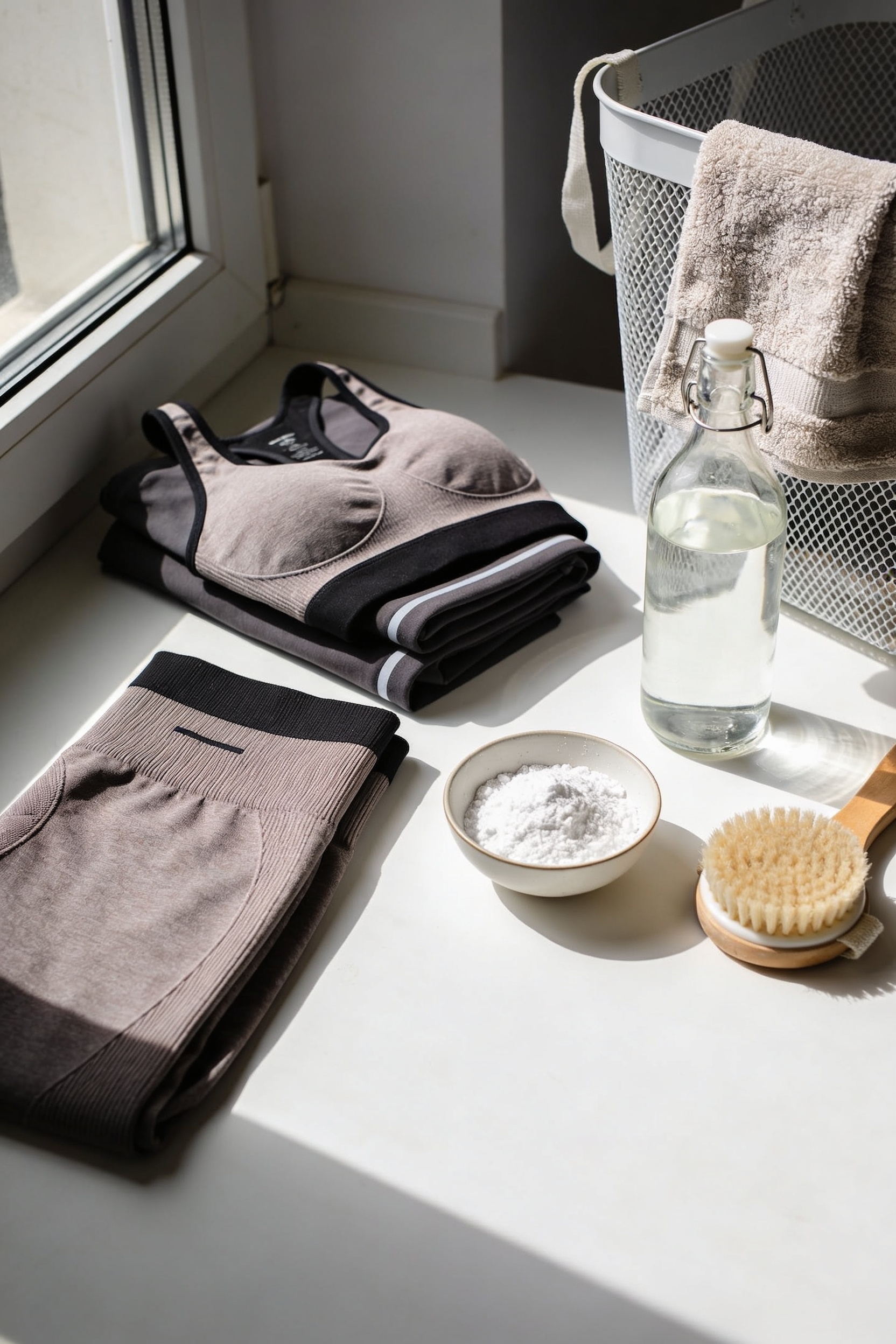
7 Tips: Keep Your Workout Gear Fresh & Clean

Look, I’m sure you’ve noticed your gym clothes smell like a locker room within hours if you don’t treat them right. The secret’s not complicated, but you’ve gotta rinse immediately after sweating, turn everything inside out before washing, and use cold water only—seriously, hot water wrecks performance fabrics. Skip the fabric softener entirely; it’s basically bacteria fuel. Use less detergent than you think you need, air dry everything, and grab activewear-specific detergent that actually targets sweat breakdown. Obviously wash after intense workouts, though lighter sessions can stretch to two uses if they don’t smell gnarly. There’s more to keeping your gear performing longer.
Key Takeaways
- Rinse sweaty clothes in cold water immediately after workouts to prevent bacteria growth and odor buildup.
- Turn garments inside out before washing so detergent directly targets sweat-soaked fibers and bacteria.
- Use cold water and air dry to preserve technical fabric performance and maintain garment shape.
- Choose activewear-specific detergent and use less than normal to avoid residue and fiber clogging.
- Wash high-intensity workout clothes after every use; use smell and stickiness as washing indicators.
Wash Your Workout Clothes Immediately After Every Workout
I’m sure you’ve noticed—that gym shirt sitting in your laundry basket for three days starts developing its own personality, and not the kind you want. Here’s the thing: sweat hardens into your fibers the longer you wait, making odor prevention nearly impossible. I mean, you’re basically giving bacteria a five-star resort.
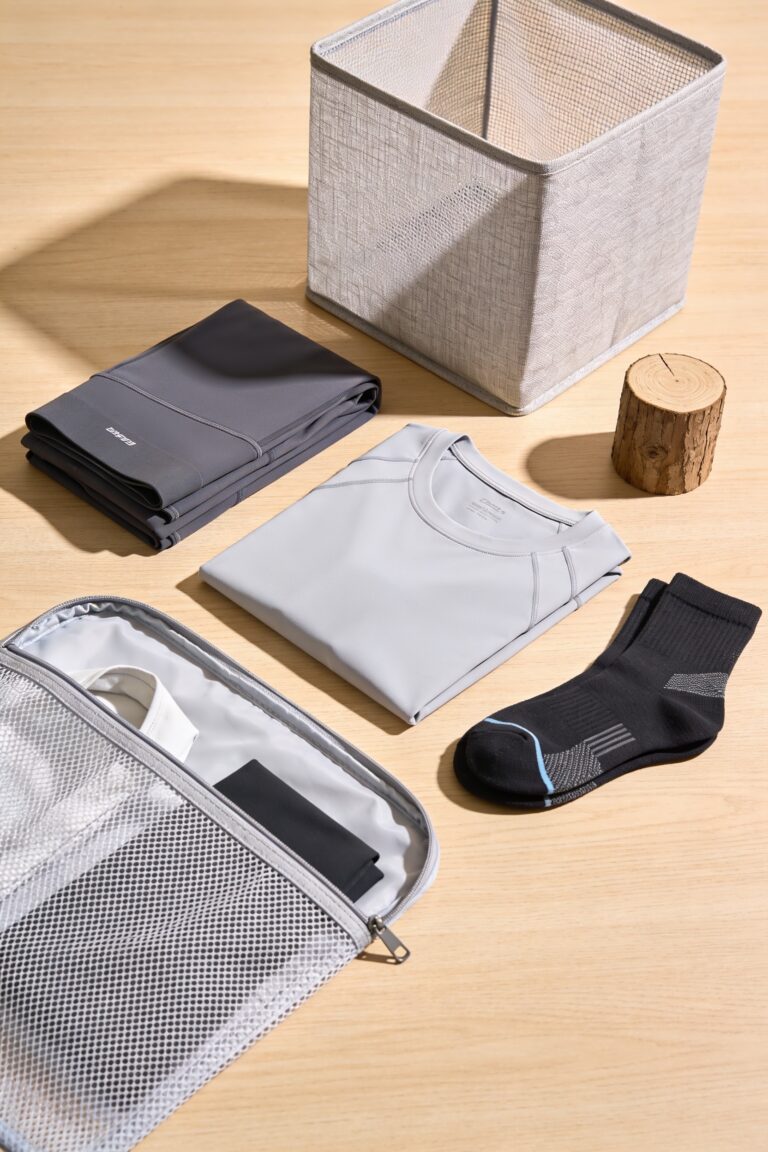
The best move? Rinse those clothes in cold water immediately after your workout. Can’t do a full wash? Hang them to air dry instead of tossing them in post workout storage. This single habit stops the smell before it takes root, which beats playing catch-up later. When you wash in cold water, you also help prevent dye transfer and preserve the moisture-wicking performance that keeps your gear functioning at its best. Tend to your gear ASAP rather than letting it marinate in the hamper—trust me, your nose (and your roommates) will thank you. Obviously, the sooner you act, the fresher you stay.
Turn Clothes Inside Out Before Washing
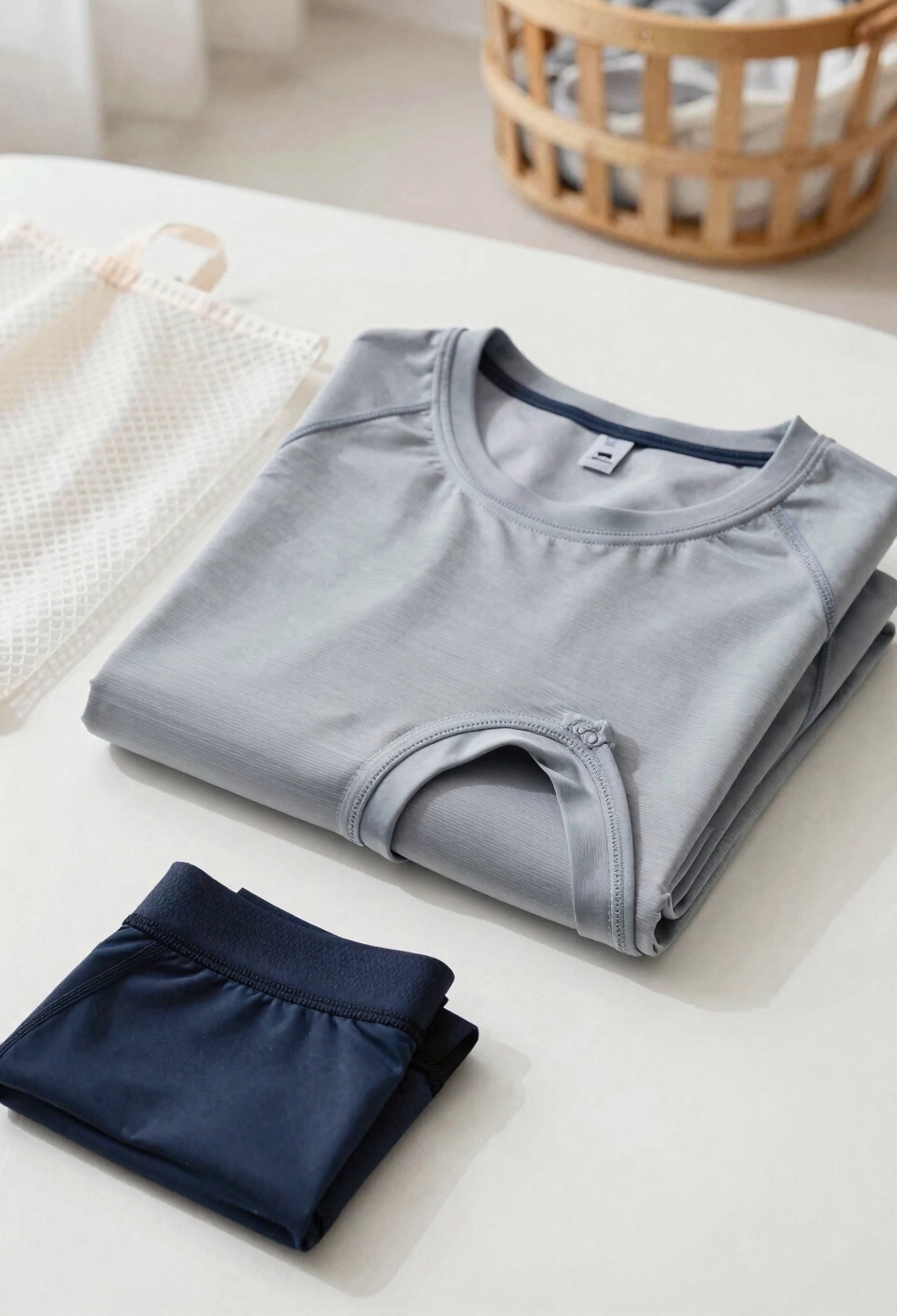
You’ve got to flip those clothes inside out before they hit the machine. I’m sure you’ve noticed that your sweat doesn’t just coat the outside—it soaks right through to the inner fabric where it hardens and festers. By turning everything inside out, you’re exposing all that nasty residue directly to the detergent where it actually matters. Now, I know it sounds like a hassle, but honestly, it takes five seconds and transforms your wash’s effectiveness. Pay attention to fabric labeling so you don’t accidentally damage anything delicate during the flip. Watch out for zipper care too—turn items carefully to avoid snagging. All right, obviously this works because bacteria and odor live where your skin touched, not the exterior. Since bamboo fabrics can hold up to three times their weight in water, this inside-out method ensures the detergent reaches all the sweat trapped within the fibers. It’s genuinely the difference between gear that smells fresh and gear that smells like regret.
Wash in Cold Water Only to Protect Performance Fabrics
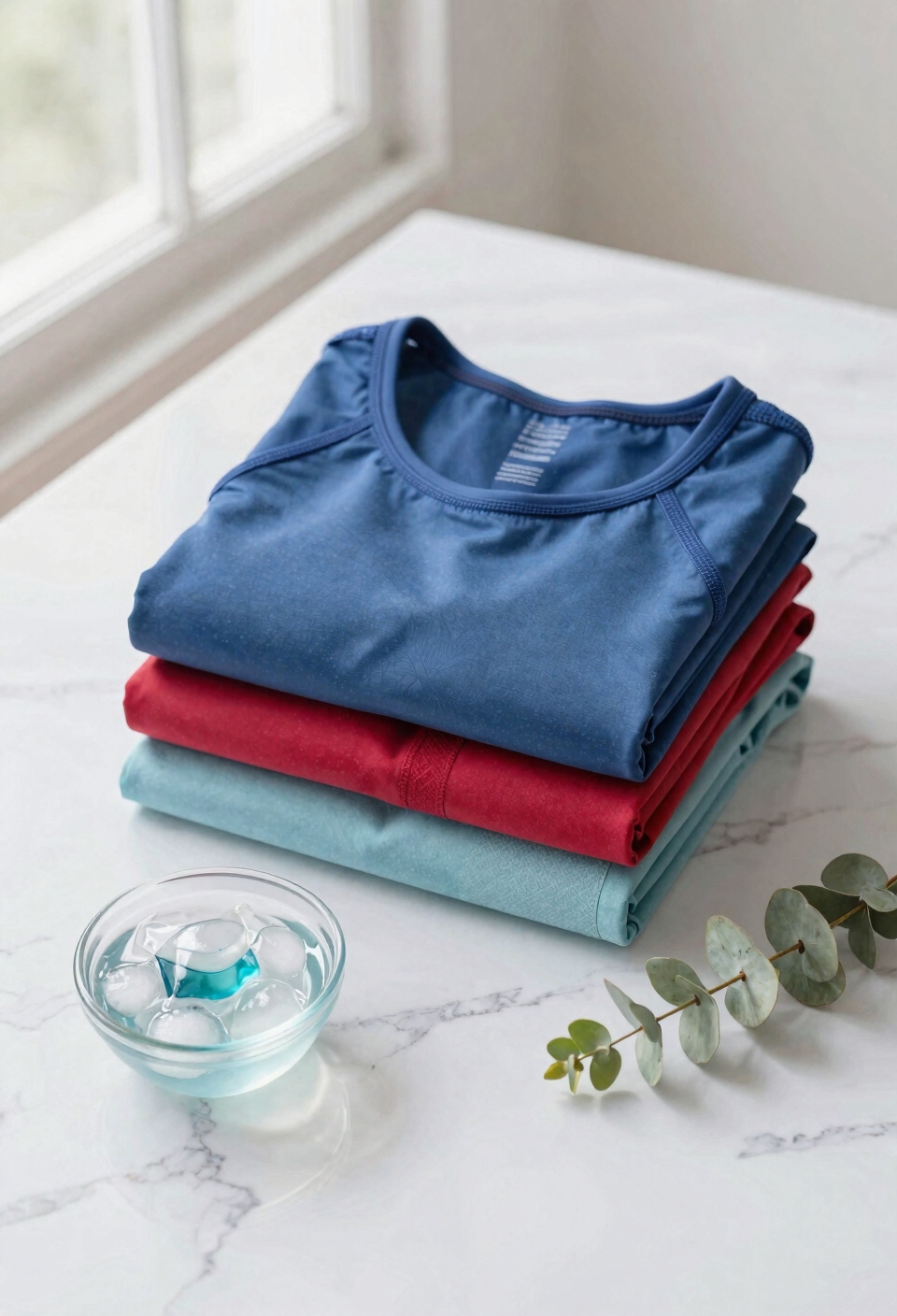
Cold water’s your secret weapon here. It lets water actually penetrate those water-repellent fabrics properly, which hot water can’t do nearly as well. You’re also protecting fabric preservation while getting better cleaning results—sounds backwards, but it works. I’m sure you’ve noticed your cold garments hold their shape way longer than stuff that’s been through the dryer repeatedly.
For performance fabrics like merino wool, cold water washing paired with air drying is essential to preserve shape and quality while maintaining the fabric’s natural performance properties. Stick with cold. Always cold. Your gear will thank you for years to come.
Use Less Detergent: Skip Fabric Softener Entirely
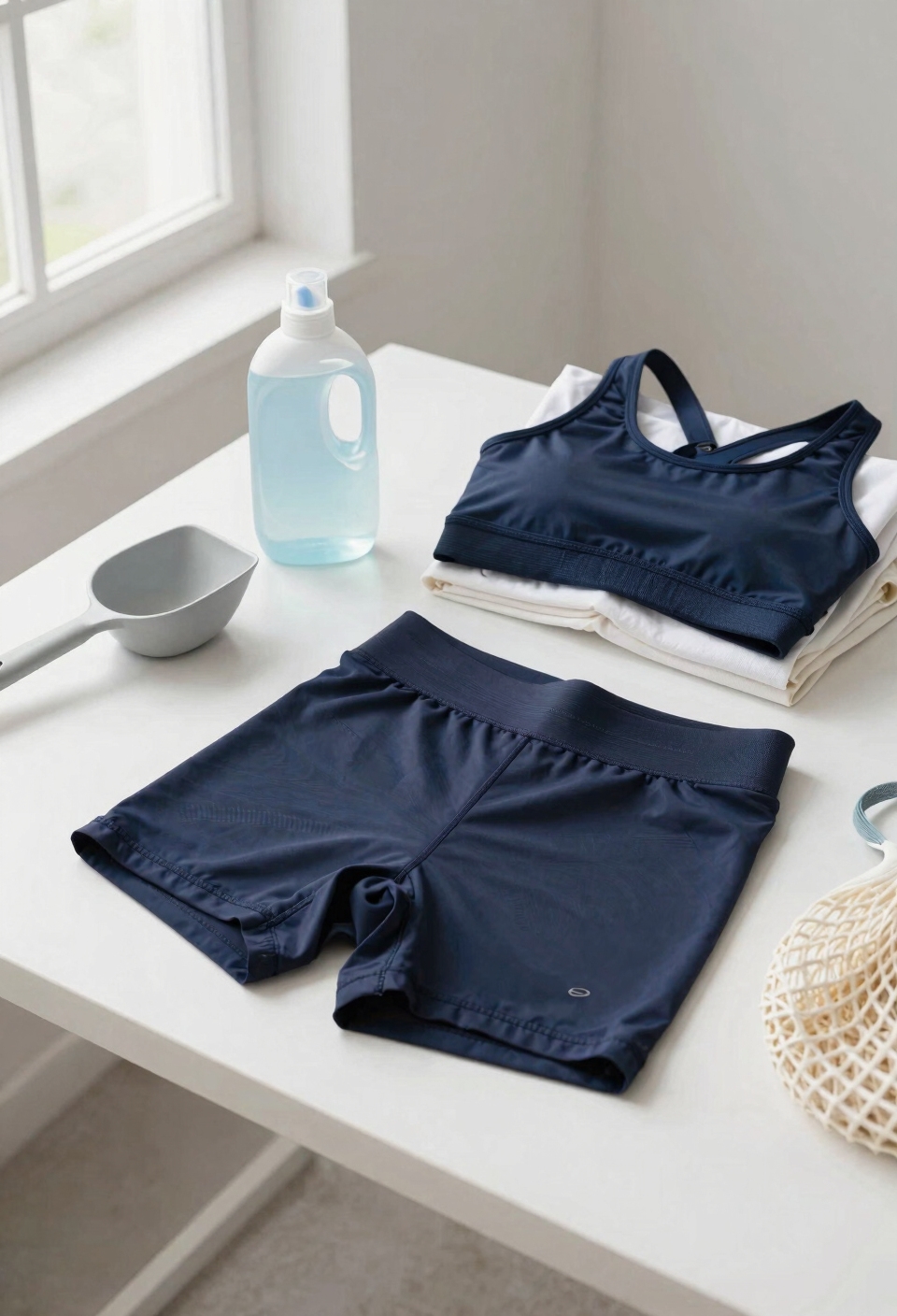
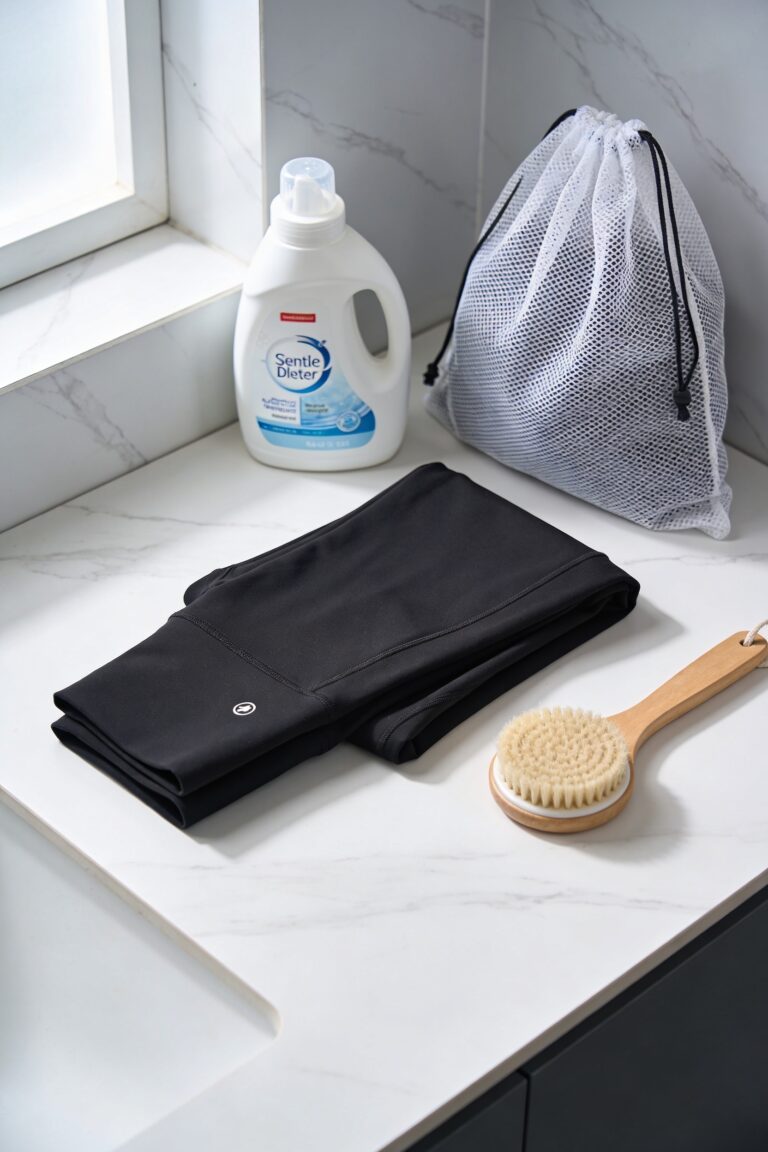
Now here’s where most people mess up, and I’ll admit I used to be one of them—we think more detergent means cleaner clothes, right? Wrong. I’m sure you’ve noticed how athletic wear gets that dingy, crusty feeling after a few washes? That’s residue prevention gone sideways. Use half what you’d normally pour in, or better yet, grab an activewear-specific formula designed for scent free maintenance. Skip the fabric softener entirely—I mean completely. That stuff clogs your fabrics like plaque in an artery and traps moisture, which basically turns your gear into a bacterial nightclub. You’re actually making things worse, defeating the whole purpose. Proper care instructions are essential for maintaining the elasticity and longevity of your workout clothes. Less detergent, no softener, and you’ll get genuinely fresher clothes that actually perform.
Air Dry Your Gym Gear Every Time
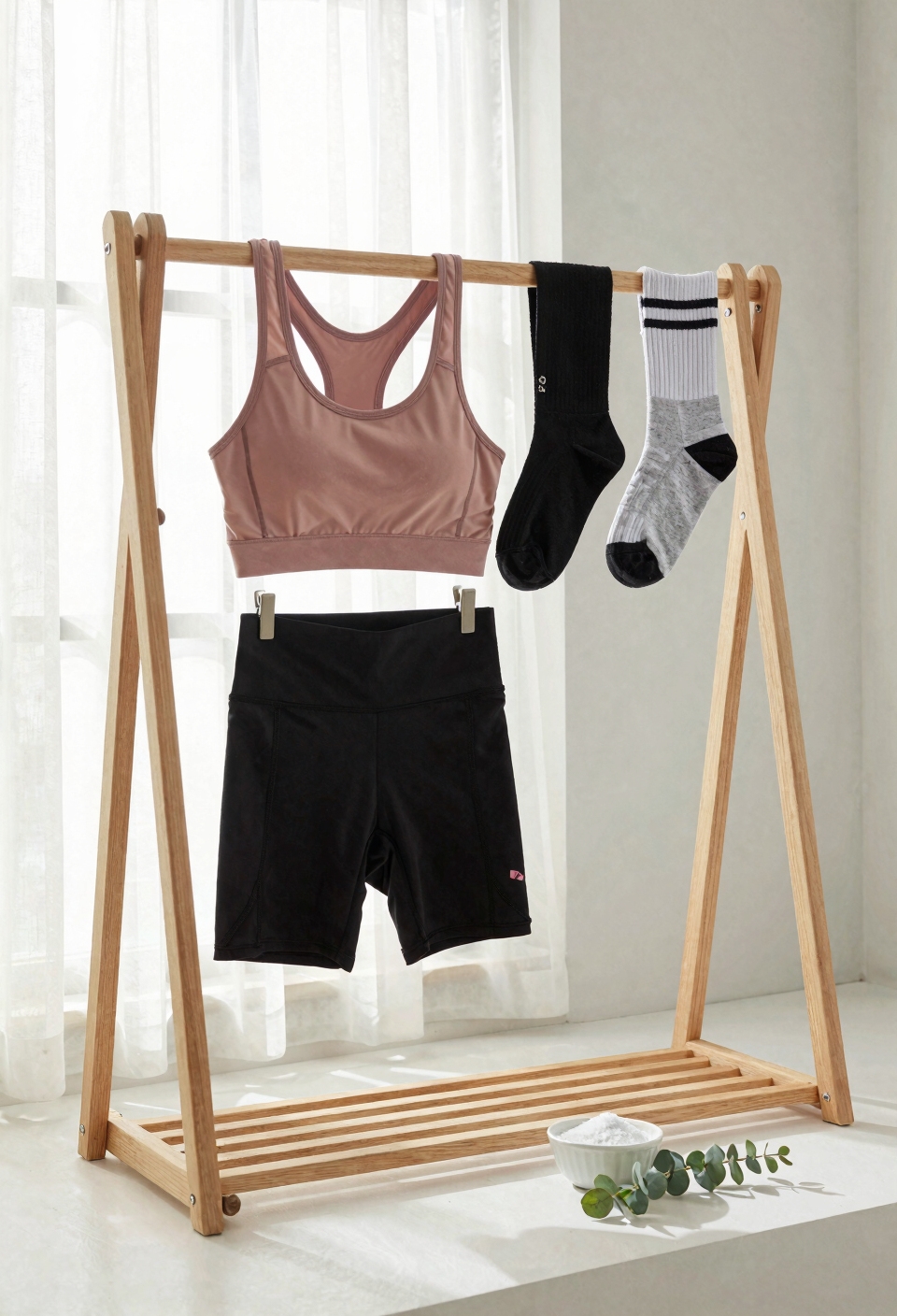
Hang everything in a breezy spot where sunlight sanitizing actually does the heavy lifting on bacteria. You don’t need a fancy drying rack; a shower rod works great. The gentle reshaping that happens when fabrics hang naturally keeps your gear in proper form, and honestly, it’s cheaper than replacing stretched-out leggings every season. Now, obviously air drying takes longer than a dryer, but your gym gear will actually last. That’s worth the patience. Air drying is particularly important for moisture-wicking fabrics since they retain their moisture-wicking properties even after 100+ washes when properly cared for.
Pick Activewear-Specific Detergent for Better Results
Since you’ve probably dumped your sweaty gym clothes in regular detergent before and wondered why they still smell like a locker room after washing, here’s the thing: standard laundry soap just isn’t built for what your workout gear’s been through. Activewear-specific detergents, though, they’re formulated with sweat activated enzymes that actually break down the organic compounds regular soap leaves behind. I mean, you’re not just dealing with dirt here—you’re battling bacteria and mineral buildup that clings to performance fabrics like it’s got a grudge. Look for formulas with microbial targeting ingredients that specifically hunt down odor-causing microbes. Honestly, once you switch to these specialized formulas, you’ll notice the difference immediately. Your gear actually smells fresh instead of perpetually funky, and it performs better too. Since premium fabric blends are designed to maintain their moisture-wicking and breathability properties, using the right detergent helps preserve these performance features that justify your investment in quality activewear.
How Often Should You Wash Workout Gear?
You’ve got the detergent situation locked down now, so here’s the question that’ll save you from either washing your gym shorts every single day like some kind of laundry obsessive or letting them fester in the corner until they can walk themselves to the machine: how often should you actually throw these things in the wash?
I’m sure you’ve noticed that frequency guidelines depend entirely on your sweat output and workout intensity. High-intensity sessions? Wash after every use. Light yoga or casual gym days? You might stretch it to two wears. Pay attention to hygiene indicators—smell, visible stains, or that sticky feeling means it’s time, regardless of what some arbitrary schedule says. Trust your nose and your instincts here. For specialized workout apparel like moisture-wicking fabric blends, following the care instructions is essential to maintain the garment’s shape and coverage after washing.
Frequently Asked Questions
Can I Wash Different Colored Workout Clothes Together Without Color Bleeding?
I’d recommend washing different colors separately to be safe, but if you’re mixing them, I’d use cold water—it minimizes bleeding. You can also try a color catcher sheet to trap loose dyes and protect your lighter pieces.
What Should I Do if My Gym Gear Still Smells After Washing?
I’d try soaking your gear in white vinegar before washing—it’ll activate odor elimination. If that doesn’t work, consider professional cleaning services designed for athletic wear’s stubborn smells.
Is It Safe to Wash Workout Clothes With Regular Household Laundry Items?
I’d play it safe and keep them separate. Workout clothes need gentler detergent alternatives and special fabric compatibility considerations that regular household detergents don’t address, preventing performance damage.
How Do I Remove Stubborn Sweat Stains From Athletic Wear Before Washing?
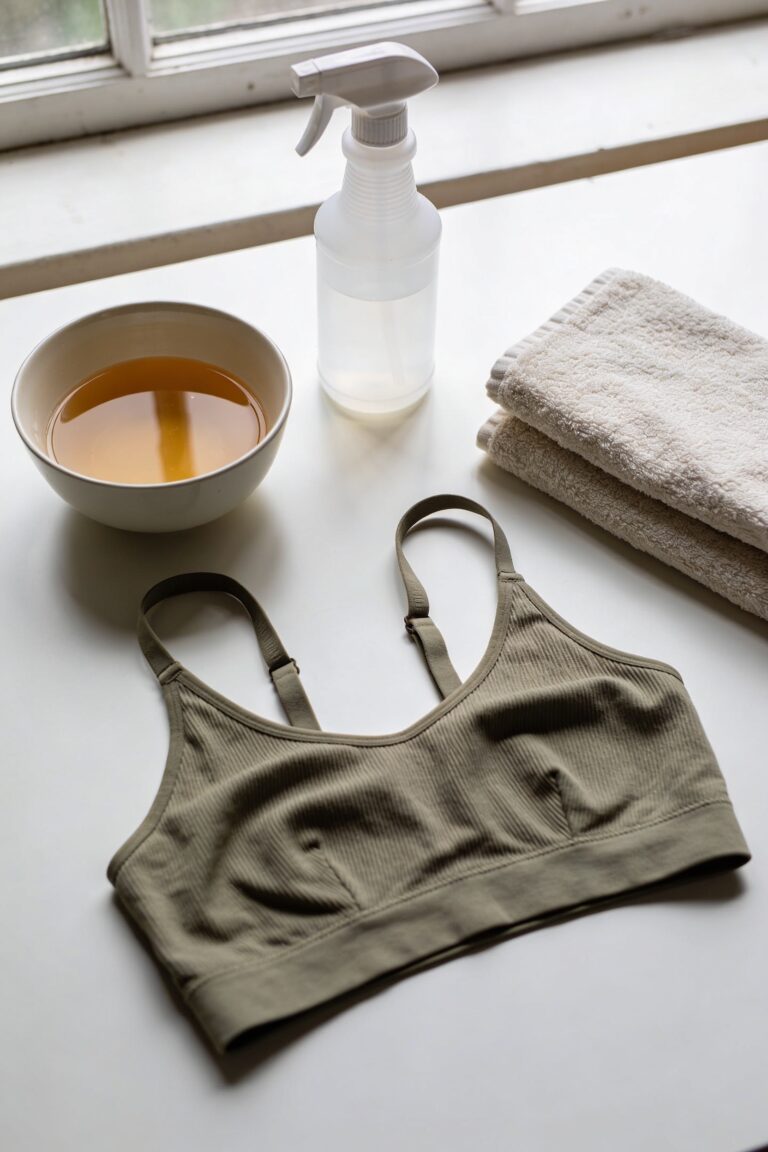
I’d recommend spot treating stubborn sweat stains with enzyme sprays before washing. Apply the spray directly to affected areas, let it sit for 15-30 minutes, then rinse with cold water before your regular wash cycle.
Can I Store Damp Workout Clothes Temporarily if I Can’t Wash Immediately?
I’d recommend against storing damp clothes, as it promotes bacteria and odor. Instead, hang them immediately for air drying to maintain odor control. Even partial drying prevents the worst buildup until you can wash them properly.
Conclusion
Your gym clothes are like gardens—neglect them, and they’ll wither into something unrecognizable. You’ve gotta tend to them consistently, give them what they need, and they’ll keep performing for you season after season. I’m sure you’ve noticed how a little care transforms everything. So treat your gear right, and it’ll treat your workouts right back. That’s the deal, really.