As an Amazon Associate, we earn from qualifying purchases. Some links on this site are affiliate links at no extra cost to you. Our recommendations are based on thorough research and editorial judgment.


Testing Sports Bras: Lab Results Vs Real Movement

Sports bra testing combines high-tech lab analysis with real-world movement data to give you the most accurate performance insights. Modern labs use 3D motion capture technology with five strategic markers to track every bounce and movement — measuring displacements down to the millimeter. You'll find that well-designed encapsulation bras can reduce breast movement from 4.37cm to just 1.45cm during intense exercise, while compression styles only achieve about 10% reduction. Lab conditions on treadmills provide precise measurements, but it's the combination of scientific data and actual workout feedback that's revolutionizing how sports bras are evaluated. There's more to discover about how these testing methods are evolving.
Key Takeaways
- Lab tests using 3D motion capture and five markers provide precise measurements of breast displacement up to 4.37 cm without support.
- Real-world movement patterns are more complex than lab simulations, though treadmill testing offers standardized measurement conditions.
- Lab testing shows encapsulation bras reduce movement by 41.33%, while compression bras achieve only 10.43% reduction.
- Advanced lab equipment measures specific metrics like RBD index, while real-world performance focuses on comfort and practical functionality.
- Future testing will combine lab precision with real-world data through fabric sensors and machine learning algorithms for comprehensive analysis.
Lab Testing Methods and Equipment
Testing sports bras requires sophisticated lab equipment and methodologies to guarantee accurate performance measurements. When you're looking for a sports bra that actually works, you'll be glad to know there's some serious science behind the testing — no guesswork here!
The cornerstone of sports bra testing is 3D motion capture technology, which uses multiple cameras to track special markers placed on participants. Think of it as creating a digital dance of breast movement that scientists can analyze down to the millimeter. You'll find that the industry-standard Vicon system — the same tech used in Hollywood movies — captures every bounce and shift during activities.
The testing process doesn't stop at motion capture. Mechanical tests put fabrics through their paces, measuring:
- Stretch resistance and recovery
- Moisture-wicking capabilities
- Fabric durability under stress
Dynamic testing brings everything together, as participants perform high-intensity exercises while researchers measure the Reduced Percentage of Controlled Breast Displacement (RBD). You might think jumping jacks in a lab sounds awkward — and you'd be right — but it's all in the name of finding the perfect sports bra!
Movement Analysis During Exercise

During exercise, your breasts move in complex patterns that scientists can now precisely measure. Using 3D motion capture technology, researchers can analyze the breast movement as it traces a figure-eight pattern — you'd be amazed at how intricate this motion really is.
When you're running without support, your breasts can move up to 4.37 cm in various directions — that's quite a journey for sensitive tissue! But here's where it gets interesting: well-designed sports bras can reduce this movement to just 1.45 cm. The difference is dramatic, and you'll feel it during your workout.
Not all sports bras are created equal, though. Encapsulation bras — the ones that support each breast individually — can reduce movement by up to 41.33%. Compare that to compression bras, which only manage about 10.43% reduction. If you're wondering why this matters, consider this: inadequate breast support can actually change how you run, potentially leading to joint and muscle problems.
The science behind these measurements helps manufacturers design better sports bras, focusing on key features like:
- Shoulder strap width
- Neckline height
- Polyamide content for shock absorption
Recommended Products

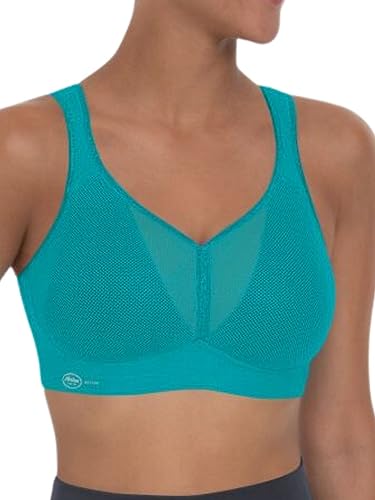
UK Sizes - Please refer to size chart

Classic sport bra with V-shaped front support in two different performance-grade fabrics
Comparison of Support Systems
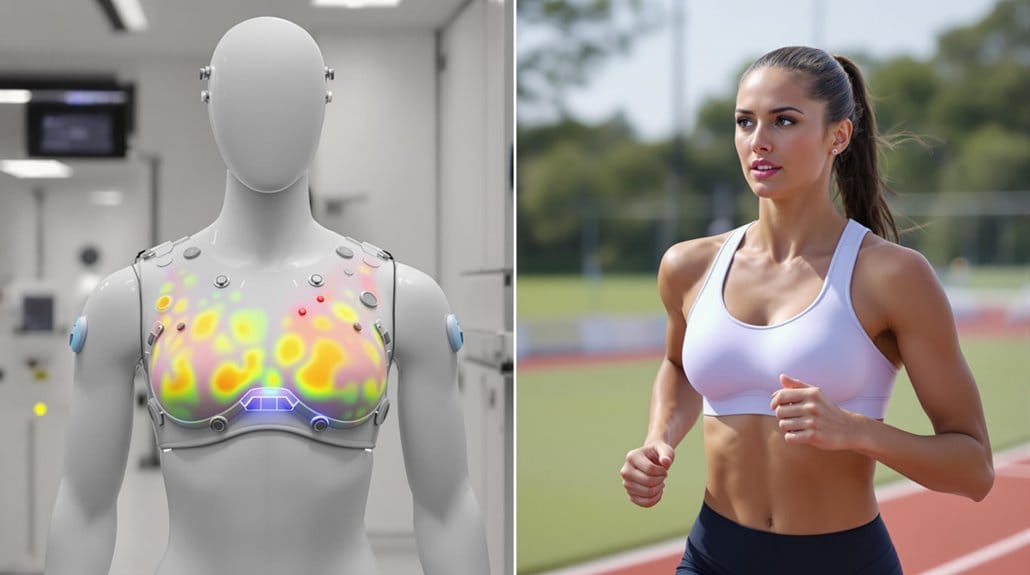
All these movement measurements bring us to an important finding: not all sports bra support systems work the same way. You might think that compression bras — those that press your breasts against your chest — would offer the best control, but the data tells a different story.
When it comes to breast displacement, the numbers don't lie. The encapsulation-style EP-2 bra — which supports each breast individually — restricted movement to just 1.45 cm, while you'd experience 2.47 cm of movement without any bra at all. If you're wondering about effectiveness, the EP-2's impressive 41.33% RBD score (that's Reduced Percentage of Controlled Breast Displacement) shows it's clearly winning the support game.
You'll find specific design features that make encapsulation support systems more effective. Higher polyamide content, wider shoulder straps — these aren't just fancy additions. They're working together to keep everything secure during your workout. While compression sports bras have their place, they're not delivering the level of support you might expect — CP-3's mere 10.43% RBD score proves this point. It's time to rethink what you know about sports bra support!
Recommended Products

UK Sizes - Please refer to size chart

This item is listed in US cup sizes

This is a UK-sized product; See our size chart to get the right fit
Data Collection and Measurement
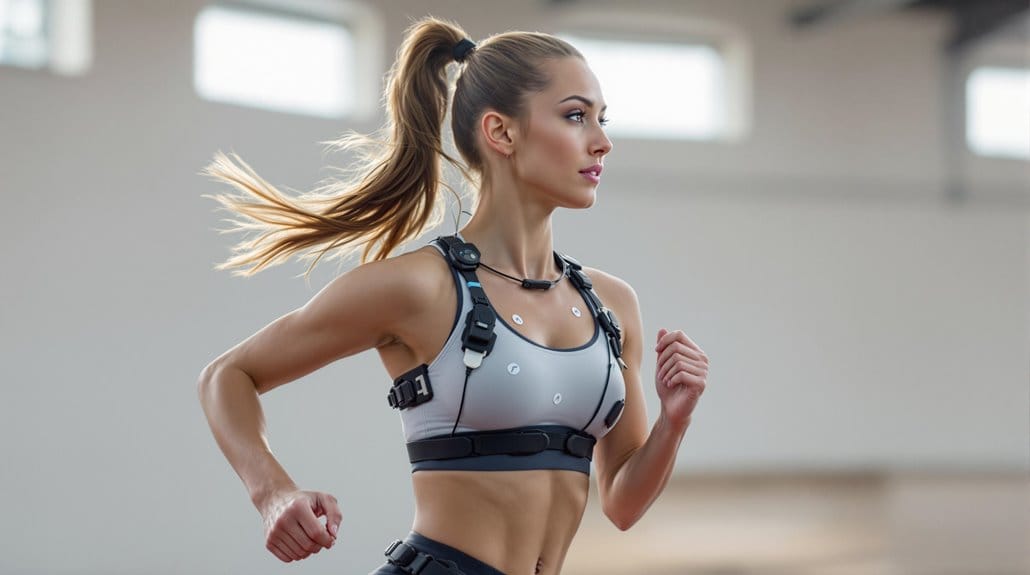
Modern sports bra testing relies on sophisticated 3D motion capture technology to track every bounce and movement. You'll find that researchers use five strategic markers — three on fixed points of the body and two on the breasts — to capture precise measurements during various activities.
When you're looking at the data collection process, you'll notice it's remarkably detailed. The testing typically occurs on a treadmill, where breast displacement is measured down to the millimeter — and yes, they've even documented movement without a bra (ranging from 1.01 to 4.37 centimeters) to establish baseline measurements. Who knew science could be so, well, bouncy?
The measurements aren't just about numbers, though. Researchers use something called the RBD index — think of it as a sports bra report card — to compare how well different bras absorb shock. You'll see significant variations in breast displacement across different sports bras and activities, which helps explain why that bargain-bin bra might not feel as supportive as its pricier counterpart. Each measurement contributes to understanding which design features actually work, rather than just looking good on the rack.
Material Performance Under Stress
A high-performance sports bra is only as good as its materials. When you're pushing your limits during a workout, you'll want to know that your sports bra has been thoroughly tested — and that's exactly what happens in specialized labs across the country.
You might be surprised to learn that material performance is measured down to the millimeter using 3D motion capture technology. The most effective encapsulation bras — you know, the ones with separate cups — can keep breast displacement to just 1.45 cm during intense activities. That's pretty impressive when you're bouncing around during a high-impact workout!
The secret lies in the fabric composition. If you've ever wondered why some sports bras feel more supportive than others, it's often due to their polyamide content. Higher polyamide percentages translate to better shock absorption — it's not just marketing talk. The width of shoulder straps matters too; wider straps help distribute pressure and control movement more effectively.
Testing includes:
- Elasticity measurements under repeated stress
- Moisture-wicking capability assessment
- RBD index calculations for shock absorption
- Dynamic movement analysis during various activities
Comfort Ratings Across Activities
The science of comfort ratings reveals striking differences across various athletic activities. You'll find that comfort isn't just about feeling good — it's about maintaining performance and preventing breast pain during your workout.
When you're testing sports bras, two factors consistently rise to the top: breathability and fabric softness. Active women who've participated in our tests report that adjustable straps make a world of difference, especially when you're switching between low and high-impact activities. Here's what you need to know:
- Encapsulation-style bras outperform compression types during high-impact moves (think burpees and jumping jacks).
- True-to-size fits reduce friction and unwanted movement during extended wear.
- Inadequate support becomes painfully obvious during intense activities.
Our two-month testing period showed that comfort isn't one-size-fits-all. You'll want to take into account your specific workout routine — a bra that feels great during yoga might not cut it for running. The most successful designs account for both body type and activity level, with special attention to those pesky problem areas where chafing and pinching typically occur. Remember, what works for your morning jog might not serve you well during that intense HIIT session. Additionally, the importance of proper size and fit cannot be overstated, as it plays a crucial role in ensuring comfort and modesty during workouts.
Recommended Products

81% Polyamide, 10% Polyester, 9% Elastane

Perform at your best in the Anita Extreme Control Soft Cup Sports Bra featuring pique-style fabric that quickly absorbs moisture and actively transports it away from the body.

Perfect for large sizes
Impact Forces and Displacement

Sports bra comfort ratings directly connect to measurable impact forces and breast displacement during exercise. When you're working out, your breasts can move up to 4.37 cm — that's nearly two inches of bounce that you'll want to control!
You'll find that different sports bras handle impact forces differently. The data shows that encapsulation bras (the ones with separate cups) are your best bet, reducing movement to just 1.45 cm — that's a 41.33% improvement in bounce control. If you've ever wondered why some sports bras work better than others, it's all in the numbers.
The science behind breast displacement isn't just theoretical — it's something you'll feel during every jumping jack or step aerobic session. While compression bras might seem like they're doing the job, they're only controlling about 10% of movement compared to their encapsulation counterparts. What's more, the materials matter: bras with higher polyamide content and wider shoulder straps — your shoulders will thank you later — provide considerably better support. When you're choosing your next sports bra, remember these measurements — they're the difference between comfort and distraction during your workout.
Recommended Products
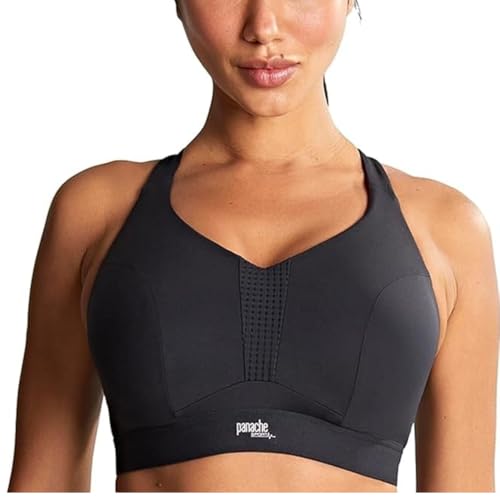
Panache is sold in UK sizing! Use the size chart to convert your US to UK size.

SUPPORT, STABILIZE, SECURE - The ENELL SPORT is scientifically designed to support, stabilize, and secure. We are determined to provide sports bras that well-endowed women can count on when and where it matters most.

Real World Testing Results
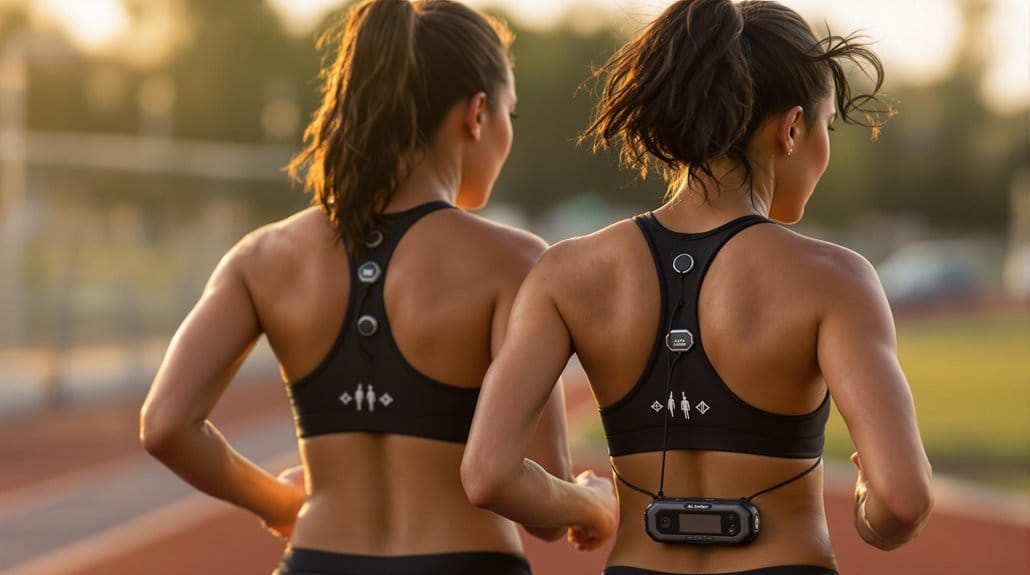
Real-world testing reveals eye-opening data about how sports bras actually perform during intense workouts. You might be surprised to learn that your breasts can move anywhere from 1.01 to 4.37 centimeters during exercise — that's quite a bounce when you're trying to focus on your workout!
When it comes to control, you'll want to pay attention to the type of sports bra you're choosing. Encapsulation bras — the ones that separate and support each breast individually — have shown impressive results with up to 41.33% shock absorption. That's considerably better than compression bras, which only manage about 10.43% control.
You'll get the best results when you focus on two key features: strap width and material composition. Wider straps provide better stability, while higher polyamide content helps control breast displacement more effectively. Here's the catch — and it's a big one — you're probably wearing the wrong bra size. Most women are, and it's affecting their workout performance more than they realize. When you're investing in a sports bra, take time to get properly fitted — your workouts (and your breasts) will thank you later.
Recommended Products


This is a UK-sized product. See our size chart to get the right fit

The Wacoal Sydney Sport Underwire Bra 855302 features two-ply cups that offer full containment, minimizing movement during running, training, or high-intensity activities. The interior underwire is strategically placed to reduce bounce while maintain
Future Testing Technologies

Emerging testing technologies are revolutionizing how we'll evaluate sports bra performance in the coming years. You'll soon see advanced fabric sensors that track your breast movement in real-time — no more guessing about support levels during your morning jog or CrossFit session.
The future of sports bra testing looks impressively high-tech. You'll benefit from 3D motion capture systems that'll work alongside biomechanical analysis to create improved sports bra designs. Think of it as having a team of scientists watching every bounce and shift while you exercise, but way less awkward!
What's really exciting is how thermal imaging will help evaluate moisture management — because nobody enjoys that post-workout chill from a sweaty sports bra. Machine learning algorithms will process data from thousands of users like you, helping manufacturers understand exactly what works for different body types and activities.
You'll also see more standardized testing protocols emerging from partnerships between brands and research institutions. This means you won't have to wonder if that sports bra really performs as advertised — the data will back up every claim with scientific precision.
Frequently Asked Questions
How to Test a Sports Bra?
Like a ballet dancer's precise movements, you'll want to test your sports bra by checking bra fit through jumping, running, and stretching. Examine fabric types for comfort and guarantee support levels match your activity needs.
Should Your Breasts Move in a Sports Bra?
While minimal breast movement is normal, you shouldn't experience excessive bouncing in a sports bra. Your comfort level and support factors matter – aim for a bra that restricts movement to about 1-2 centimeters during activity.
How Do You Know if a Sports Bra Is Good?
Put it to the test: a good sports bra's support features should keep you locked and loaded during movement. Check the fit evaluation for minimal bounce, guarantee fabric quality feels sturdy, and confirm it's comfortably snug.
What Is the Lifespan of a Sports Bra?
Your sports bra's lifespan typically ranges from 6-12 months, depending on replacement frequency and material durability. With proper wash care, you'll get about 30-50 washes before needing a new one.