As an Amazon Associate, we earn from qualifying purchases. Some links on this site are affiliate links at no extra cost to you. Our recommendations are based on thorough research and editorial judgment.

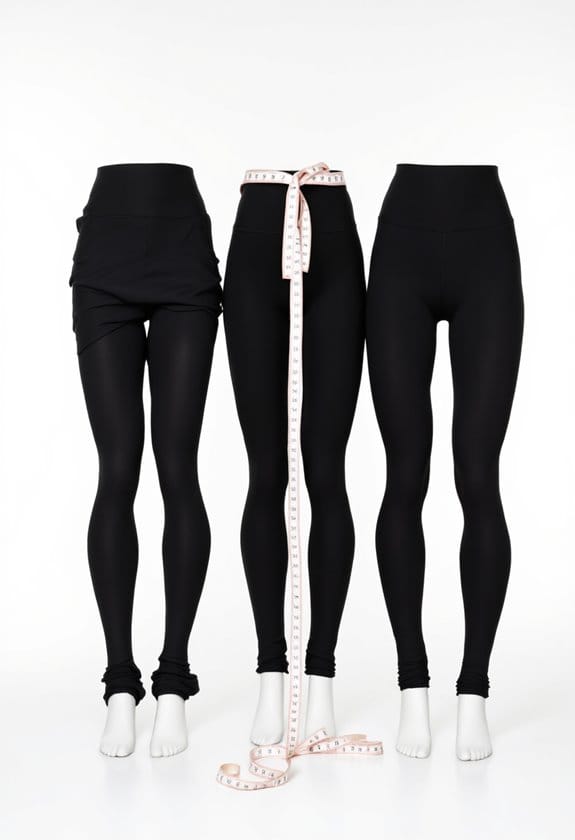
Why Women’s Gym Leggings Never Fit You Right

Your gym leggings might not be fitting right because you're likely making common sizing mistakes. Standard pants sizes don't translate well to leggings, and each brand's sizing chart is different – what's a medium in one could be a large in another. You'll need exact measurements of your waist (smallest part), hips (fullest part), thighs (widest part), and inseam for the perfect fit. Factors like compression level, material stretch, and rise height also affect how leggings perform during workouts. A quick squat test can reveal if they're truly workout-ready – and there's much more to getting that perfect fit.
Key Takeaways
- Inconsistent sizing between brands means your usual size may not translate accurately across different legging manufacturers.
- Body measurements often differ from standard sizing charts, requiring precise measurements rather than relying on regular pants size.
- Different compression levels and fabric stretch properties affect fit differently based on your specific workout intensity needs.
- Body shape variations aren't always accommodated by standardized legging designs, leading to issues like waistband rolling or bunching.
- Incorrect rise selection (high, mid, or low) for your body type can cause discomfort and constant readjustment during workouts.
Understanding Your Body Measurements
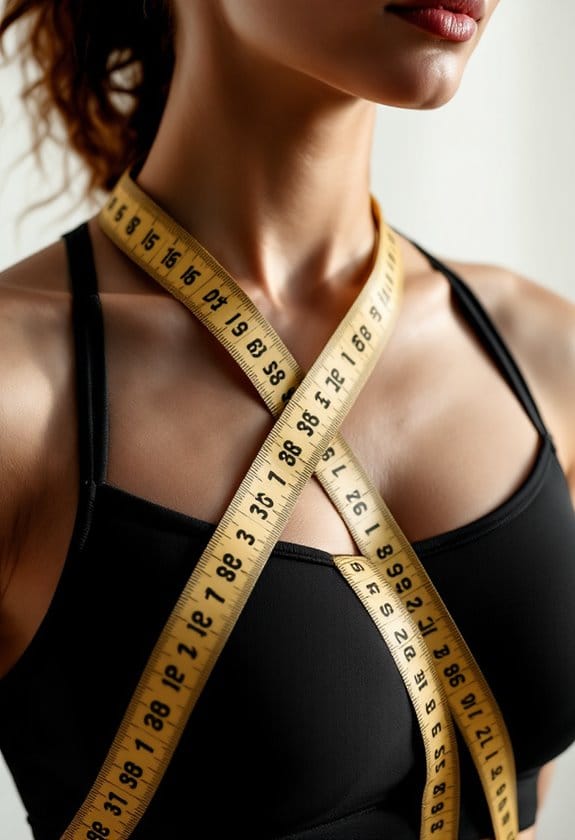
A proper fit in gym leggings starts with knowing your exact measurements. You can't just guess your size or grab whatever worked last time — especially with compression leggings, where fit matters most.
Let's get specific about what you need to measure:
- Waist: Find the smallest part of your natural waistline — usually above your belly button
- Hips: Measure around the fullest part of your bottom
- Inseam: The length from your crotch to where you want the leggings to end
- Thighs: Wrap the tape around the widest part of each thigh
Your body shape plays a significant role in how leggings will fit you. Those Instagram-perfect leggings might look different on you because — surprise! — we're all built differently. When you're checking size charts (and you should always check them), remember that Brand A's medium could be Brand B's large. Additionally, consider sizing recommendations to ensure proper coverage during workouts, especially for high-impact activities.
Pro tip: Don't just measure once and call it a day. Take each measurement twice to verify accuracy, and write them down somewhere handy. You'll thank yourself later when you're shopping online and can't remember if your waist was 28 or 29 inches.
Common Sizing Pitfalls
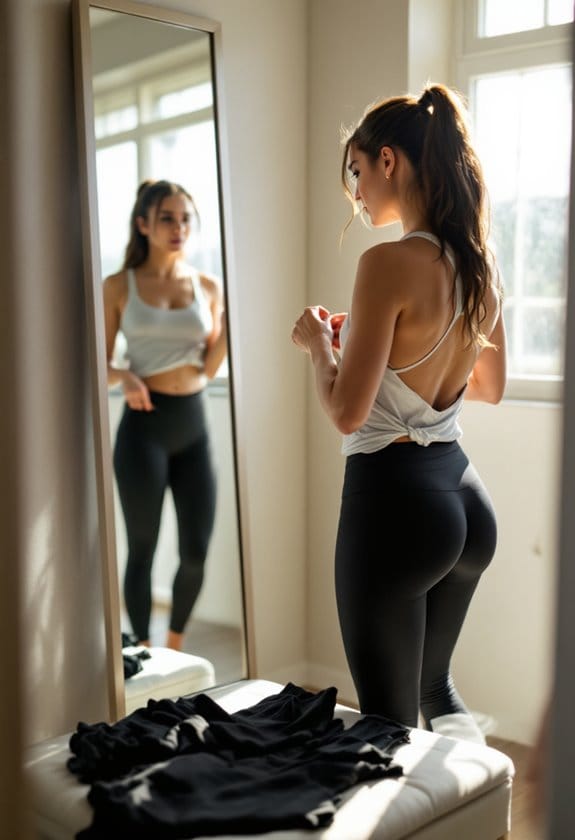
Now that you've got your measurements down, let's talk about where most women go wrong with legging sizes. The most common mistake? Assuming your regular pants size will match your leggings size — it's a trap we've all fallen into!
One of the biggest sizing pitfalls comes from brand inconsistencies. You might be a medium in one brand's high-waisted leggings but need a large in another — and that's completely normal. The introduction of four-way stretch materials has made sizing even trickier, as these fabrics behave differently than traditional two-way stretch options.
Here's where things often go wrong:
- Choosing wrong size based on regular pants size
- Ignoring specific brand size charts
- Not accounting for fabric stretch type
- Failing to take into account intended use (training vs. casual wear)
Size discrepancies often lead to common fitting problems you'll want to avoid:
- See-through fabric when stretched (indicates too small)
- Bunching at the knees or ankles (suggests too large)
- Waistband rolling down during movement
- Compression levels that feel uncomfortable or restrictive
The right size and fit should feel like a second skin — supportive but never constraining. Additionally, knowing the importance of moisture-wicking properties can help you select better-fitting leggings that also support your workout needs.
Material Stretch and Support
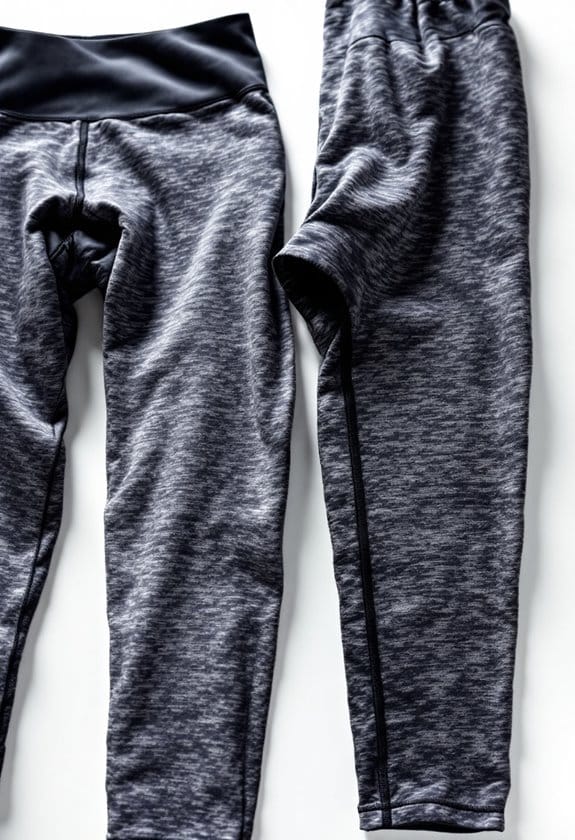
Understanding material stretch factors heavily into finding your perfect leggings fit. When you're browsing for your next pair, you'll want to pay attention to whether they're made with four-way or two-way stretch fabric — it's not just marketing jargon, it really matters!
High-quality materials with four-way stretch will give you that coveted full range of motion — no more awkward limitations during your deep squats or yoga poses. If you're looking into compression leggings, you'll need to be extra mindful of proper sizing. While they're great for support and blood circulation during intense workouts, the wrong size can turn your dream leggings into a workout nightmare.
Here's what you should look for in your leggings' material:
- Moisture-wicking fabrics that keep you dry (because nobody enjoys feeling like they're wearing a wet blanket)
- Strong stretch recovery that won't leave you with saggy knees after an hour
- Opaque fabric that stays that way when stretched — the squat test doesn't lie! Additionally, consider bamboo fabrics which naturally wick sweat away from the skin, enhancing comfort during your workouts with improved ventilation.
Rise and Length Selection
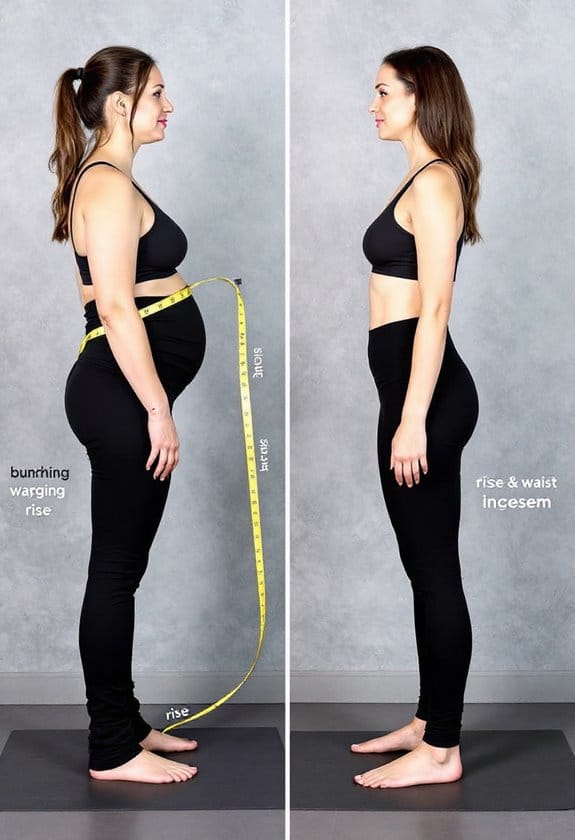
When selecting your perfect pair of leggings, rise and length options can make or break your workout experience. Understanding where your legging rise sits on your waist and how the length hits your ankle can transform an ordinary pair into your go-to workout companion.
High waisted leggings have become the gold standard for comfort and coverage — and let's be honest, who doesn't want to avoid that dreaded mid-workout roll-down? They're particularly effective at providing the support you need while keeping everything in place during those challenging moves.
When it comes to length, you've got options that'll work for your specific needs. Full length leggings are your best bet for cold-weather workouts or when you want complete coverage. If you're on the shorter side, 7/8 length leggings might be your perfect match — they create the illusion of longer legs while avoiding that bunched-up ankle look that can plague full-length styles.
To sidestep common fit issues, consider your typical workout routine and body proportions. The right combination of rise and length guarantees a comfortable fit that moves with you, not against you. Remember: where style meets function is where you'll find your perfect leggings match. Additionally, opting for moisture-wicking fabrics helps enhance comfort during intense workouts.
Finding Your Perfect Fit
The right rise and length set the foundation, but getting your perfect legging fit requires a strategic approach. To find your perfect pair, you'll need to get familiar with your measurements — and yes, that means breaking out the measuring tape.
Start by measuring your waist at its smallest point (usually around your belly button) and your hips at their fullest. Don't forget your inseam measurement from crotch to ankle — it's essential for avoiding that dreaded ankle bunching. A size chart is your best friend here, but remember that one brand's medium isn't necessarily another's.
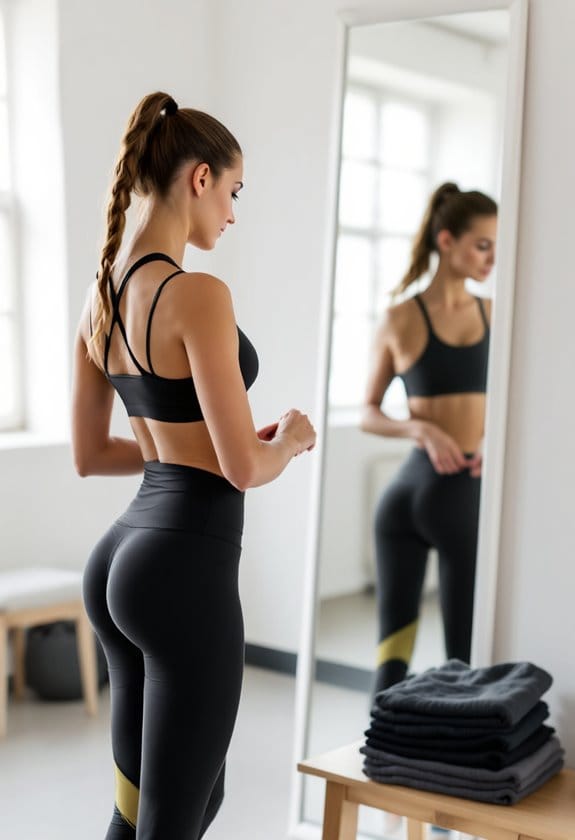
When trying on leggings, they should feel snug but not suffocating — think second-skin comfort. High-waisted styles offer superior support and won't pull a disappearing act during your squats. Here's a pro tip: do the opacity test. Bend, stretch, and squat in front of a mirror. If you can see through them, they're not the ones for you. Additionally, look for leggings with 15-20% elastane content to ensure they stay in place during your workouts.
Remember, a perfect fit means:
- No rolling or sliding during movement
- Comfortable compression without restriction
- Complete opacity during stretches
- Smooth silhouette without bulging seams
Recommended Products

Align HR pants 28"

100% PURE CASHMERE: Luxuriously soft, lightweight fabric offers natural thermal insulation for warmth without bulk, ideal for freezing temperatures

Our sustainable leggings made for running and cycling
Movement Tests for Leggings
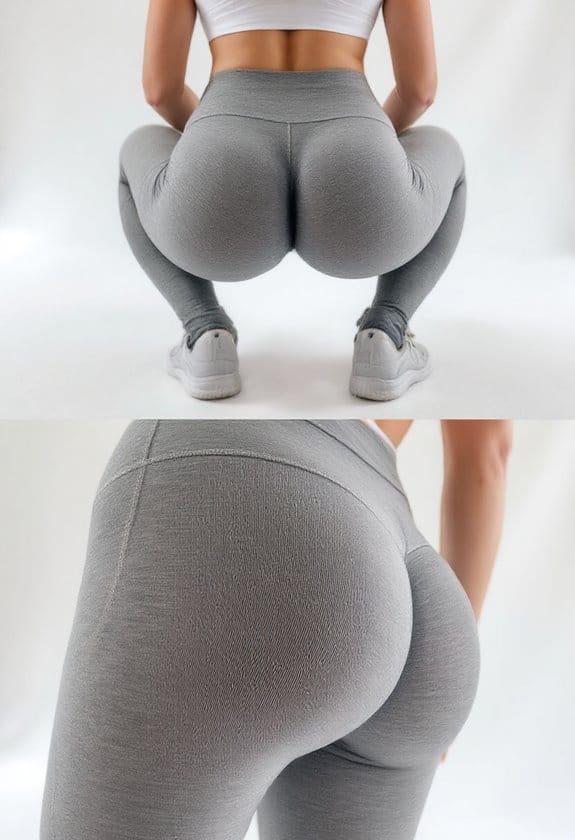
Before investing in new leggings, you'll want to put them through a thorough movement test to confirm they're truly workout-worthy. Start with the classic squat test — if you can see through the fabric when bending, they're not passing this vital challenge.
You'll need to mimic your typical workout movements to guarantee a secure fit throughout your session. Try a few lunges and check for any slipping at the waistband — no one wants to constantly hike up their leggings between sets. Next, perform a quick stretch test by moving your legs into various positions to check if the fabric maintains its shape without feeling restrictive.
Don't forget to assess the crotch area by walking or jogging in place — any pinching or discomfort is a clear sign to try a different size. Finally, test the leggings' opacity by moving into a wide stance under bright lighting. They should remain completely opaque while providing a comfortable fit across all areas.
Compression Level Guidelines
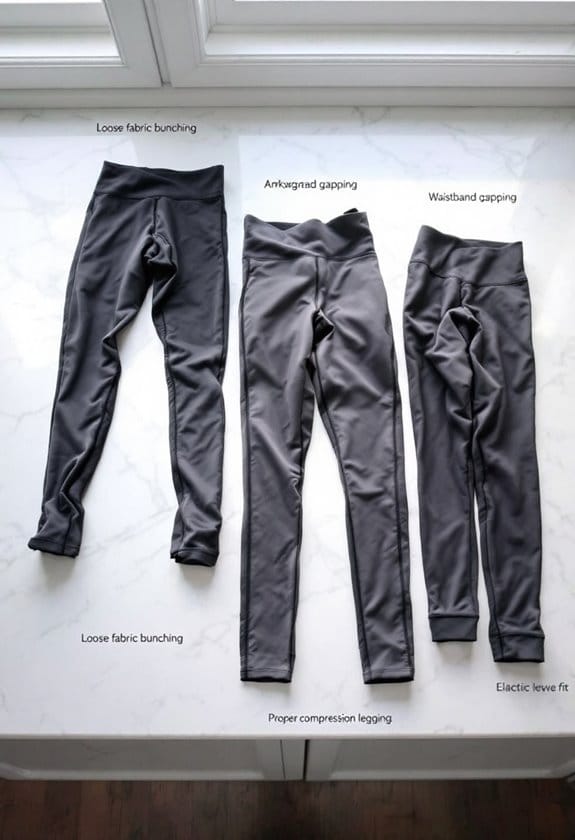
Moving beyond basic fit tests, proper compression levels play a key role in your leggings' performance. When you're shopping for workout leggings, you'll need to match the compression level to your activity — it's not a one-size-fits-all situation.
Light compression works perfectly for your casual yoga sessions or daily errands, providing gentle support without feeling restrictive. For high-intensity workouts, you'll want to step up to medium or high compression to boost your blood circulation and reduce muscle fatigue. Here's what to take into account:
- Check sizing charts specifically designed for compression leggings — they're different from regular clothing sizes
- Test the snugness around your calves and thighs — you should feel supported, not squeezed
- Look for moisture-wicking materials that'll keep you dry during intense sessions
Your activity level is the best guide for choosing compression strength. If you're planning on HIIT workouts or long runs, opt for firmer compression. For low-impact activities or recovery days, lighter compression will do just fine. Remember, you shouldn't feel like you're fighting against your leggings — they should work with you, not against you.
Frequently Asked Questions
Why Do Leggings Never Fit Me Right?
You're fighting a cosmic battle! Between wild brand variations, tricky size inconsistencies, different fabric stretches, and unique body shapes, finding leggings with the right compression levels and perfect waistband fit is nearly impossible.
Should I Size up or Down in Gym Leggings?
Check each brand's size chart as they differ widely. Consider your body shape, preferred compression level, and fabric stretch. Test waistband styles and rise length to ascertain comfort. Size up if you're between sizes.
How Should Women's Leggings Fit?
Your leggings should fit like a second skin with proper fabric stretch. Look for compression levels that suit your body shape, and choose rise options and waistband styles that stay put without pinching.
Why Are Workout Leggings so Tight?
You'll find leggings are snug to enhance fabric elasticity and match your body shape. The compression levels support movement while sizing standards and brand differences accommodate various style preferences for different activity types.