As an Amazon Associate, we earn from qualifying purchases. Some links on this site are affiliate links at no extra cost to you. Our recommendations are based on thorough research and editorial judgment.

Why Nike Still Dominates Over Under Armour Today

Nike's dominance over Under Armour boils down to pure numbers and smart strategy. You're looking at Nike's massive $39 billion revenue versus Under Armour's $5.2 billion – that's not even close! Nike controls 46% of the athletic footwear market with their $24.2 billion footwear revenue, while Under Armour trails at just $1.06 billion. When it comes to brand power, Nike's got celebrities like LeBron James and Serena Williams, plus they're killing it with tech innovation – from Flyknit to performance-tracking sensors. Their 1,000+ global retail stores and robust digital ecosystem (hello, Nike App!) keep them miles ahead. The real story of Nike's supremacy goes even deeper than these impressive stats.
Key Takeaways
- Nike's $39 billion revenue dwarfs Under Armour's $5.2 billion, demonstrating overwhelming market dominance and financial strength.
- Nike controls 46% of athletic footwear market share, while Under Armour's footwear revenue remains less than 5% of Nike's.
- Nike's extensive network of 1,000+ retail stores globally ensures broader distribution and accessibility compared to Under Armour.
- Nike's superior celebrity partnerships and endorsements, including LeBron James and Serena Williams, create stronger brand recognition.
- Nike's advanced digital ecosystem and technology integration provide better customer experience through apps and connected products.
Market Share and Revenue Dominance
When it comes to the battle of athletic wear giants, Nike's dominance over Under Armour is strikingly clear in the numbers. You'll find Nike's staggering $39 billion in total revenue dwarfs Under Armour's $5.2 billion — and that's just the beginning of the story.
If you're looking at footwear alone — arguably the crown jewel of athletic wear — Nike's supremacy becomes even more apparent. They've captured an impressive 46% of the athletic footwear market share, while generating $24.2 billion in footwear revenue. Under Armour, meanwhile, has managed just $1.06 billion in footwear sales — that's less than 5% of Nike's footwear revenue.
You might wonder about stability and growth — Nike's got that covered too. Their steady 6.5% annual revenue growth shows they're not just bigger, they're more consistent. Under Armour's fluctuating growth patterns suggest they're still finding their footing in the market. The numbers tell an even more dramatic story when you look at market value — Nike's $115 billion market cap makes Under Armour's $8.8 billion look like pocket change. It's clear who's wearing the championship belt in this match-up.
Recommended Products

Full grain leather upper and protective toe cap

Full grain leather and 70% recycled textile upper

EU Size: 42 – US Size: 9 Men | Runs Small, Street Shoe Sizing or Larger Strongly Recommended
Brand Recognition and Consumer Trust

Anyone familiar with athletic wear knows the Nike swoosh is practically synonymous with sports itself. When you're looking at the apparel market, there's simply no comparison between Nike's brand recognition and Under Armour's — the numbers tell the compelling story.
You'll find Nike's dominance reflected clearly in the market data: their $115 billion market capitalization dwarfs Under Armour's $8.8 billion. What's even more telling is how Nike has built consumer trust through decades of strategic partnerships and marketing campaigns — they're not just selling shoes, they're selling an experience you've grown up with.
While Under Armour certainly isn't a small player — $5.2 billion in revenue isn't exactly pocket change — they're still playing catch-up to Nike's impressive $39 billion. You might notice Nike's presence everywhere you look, from your favorite athletes' feet to major sporting events, and that's no accident. They've masterfully woven themselves into the fabric of sports culture through celebrity partnerships and social initiatives that resonate with you, whether you're a professional athlete or a weekend warrior.
Recommended Products


Product Innovation and Development
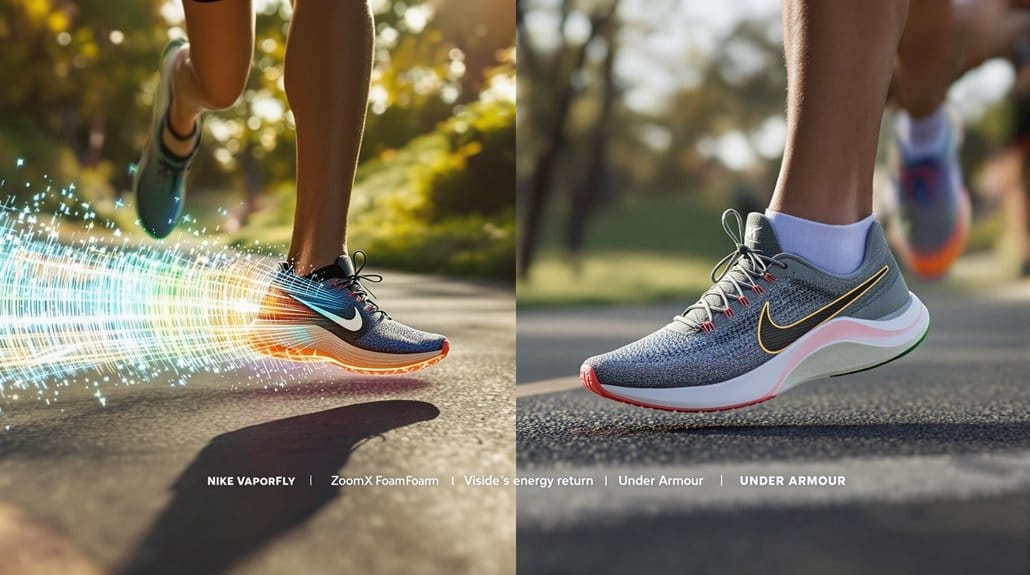
Strong brand recognition only takes you so far — it's what's inside the box that keeps customers coming back. When you look at Nike's product innovation compared to Under Armour's, you'll see why Nike maintains its leadership position in the athletic market.
Nike's commitment to market research and development has produced game-changing technologies that you won't find anywhere else. Take their Flyknit technology — it's not just another fancy shoe material, it's a complete reimagining of how performance features can be woven directly into apparel and footwear. While Under Armour's growing at a respectable 16.2% annually in footwear, they're still playing catch-up to Nike's $24.2 billion footwear revenue.
You might notice Nike's constant stream of new releases isn't just for show — they're actually pushing the boundaries of what's possible in athletic gear. Their integration of performance-tracking sensors in shoes (because who doesn't want their footwear to double as a personal trainer?) shows how they're always thinking ahead. While Under Armour's making strides, Nike's extensive R&D investments keep them several steps ahead in the innovation race.
Recommended Products


High wearing comfort

Distribution Networks and Retail Presence
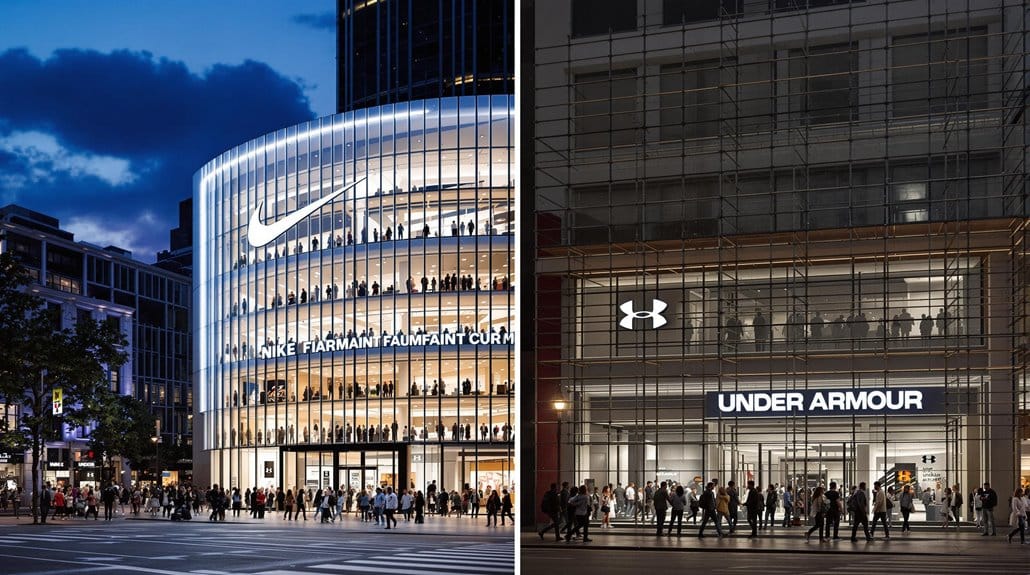
The retail battleground between Nike and Under Armour isn't even close when you look at their distribution networks. With over 1,000 retail stores worldwide and partnerships with countless department stores, Nike's got a stronghold that's hard to challenge — they're practically everywhere you turn.
You'll find Nike's dominance reflected in the numbers: they control about 46% of the athletic footwear market in the U.S., while Under Armour's trying to catch up from way behind. When Sports Authority went bankrupt in 2016, it dealt Under Armour a significant blow — imagine losing a major player in your distribution lineup overnight.
While Under Armour's been working to expand internationally, they're still only making less than 10% of their revenue from global sales. Meanwhile, Nike's strategic game is on point — you'll spot their products at major sporting events, on celebrity athletes, and across various retail platforms. It's like comparing a local highway to an international expressway — both get you there, but Nike's distribution network reaches more destinations with greater efficiency. You might say they've mastered the art of being everywhere their customers want to be.
Recommended Products

A new point-loaded cushioning system features a plastic clip that distributes weight to targeted points across the Air unit, delivering a unique experience full of bounce.
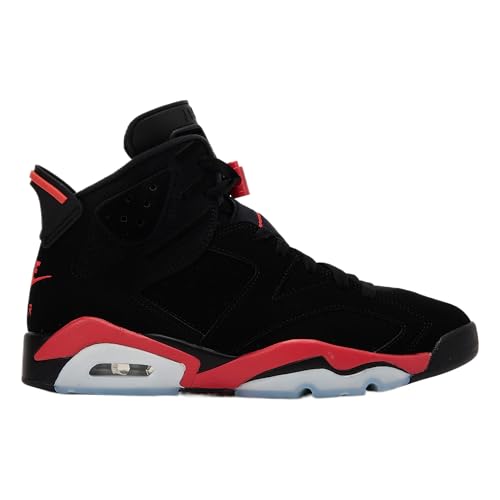
Nike Air unit in the heel and forefoot provide ample cushioning.

Nike Men's Kobe 9 Basketball Shoe
Celebrity Partnerships and Endorsements

Celebrity endorsements represent a major battleground where Nike's dominance truly shines through. When you look at Nike's roster of professional athletes and celebrities — from LeBron James to Serena Williams — you'll notice they've built an empire of influential partnerships that keeps their basketball shoes flying off shelves.
While Under Armour has made notable moves in the market with Stephen Curry's signature line, you can't help but notice they're playing catch-up to Nike's star-studded lineup. The recent loss of Joel Embiid to Skechers shows just how volatile these partnerships can be — and how essential it is to maintain them. Even Under Armour's partnership with Dwayne "The Rock" Johnson, while innovative, hasn't quite matched Nike's cultural impact.
You'll see Nike's strategic advantage in how they're positioning themselves for future talent, too. The buzz around potentially signing collegiate basketball sensation Caitlin Clark demonstrates their forward-thinking approach to celebrity endorsements. This aggressive strategy — backed by substantial marketing budgets and decades of experience — keeps Nike several steps ahead of Under Armour in the battle for consumer attention and brand loyalty.
Digital Strategy and Technology Integration
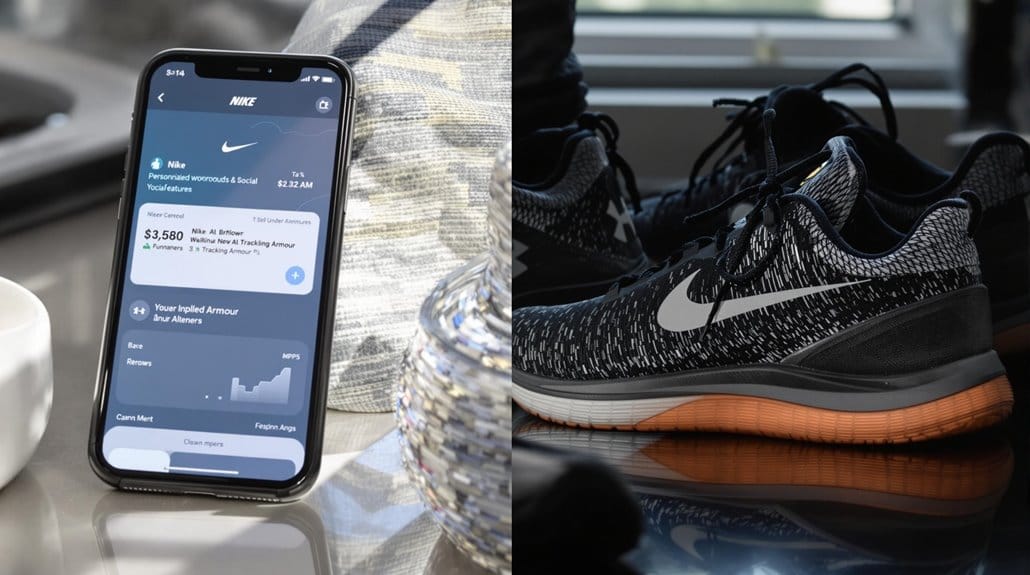
Innovation defines Nike's approach to digital strategy, where you'll find an extensive ecosystem of apps, smart technology, and data-driven solutions that's leaving Under Armour struggling to keep pace.
When you look at Nike's digital strategy, you'll notice they're playing chess while others are playing checkers. Their Nike App and Nike Training Club aren't just fancy add-ons — they're central to how you experience the brand. You're getting personalized workout recommendations while Nike's collecting valuable data about your preferences and habits.
The numbers tell the story in e-commerce, where Nike's seeing impressive double-digit growth. You might've noticed their smart technology integration in products like their connected footwear — yes, your shoes can now track your performance (welcome to the future!). Their partnership with Apple for Nike+ shows you they're serious about technology integration, while Under Armour's been remarkably absent from similar high-profile tech collaborations.
What really sets Nike apart is how they're using data analytics to understand you better. Every time you browse their online store or use their apps, they're learning more about what you want — and they're getting pretty good at predicting what you'll need next.
Recommended Products

Material: metal, plastic

Gps running watch with Garmin Coach training plan support.Supported Application:GPS,Fitness Tracker,Heart Rate Monitor,Sleep Monitor,Music Player. Connectivity technology:GPS. Wireless comm standard:Bluetooth

Frequently Asked Questions
Why Is Under Armour a Competitor to Nike?
You'll see Under Armour competing with Nike through their brand differentiation in performance wear, aggressive marketing strategies, constant product innovation in moisture-wicking technology, and growing consumer loyalty among athletes seeking high-performance gear.
Why Is Nike so Dominant?
When it comes to the cream of the crop, you'll find Nike's dominance stems from its unmatched global presence, cutting-edge product innovation, powerful marketing strategies, and rock-solid brand loyalty that keeps customers coming back.
Who Sells More Nike or Under Armour?
You'll find Nike considerably outsells Under Armour across all metrics. Their $39 billion revenue dwarfs UA's $5.2 billion, showing dominant market share, stronger brand loyalty, and consistent sales trends matching consumer preferences.
Why Is Under Armour Not Doing Well?
Under Armour's strategy has faltered due to poor market positioning, inconsistent leadership, and failure to adapt to athleisure trends. Your brand perception has suffered, leading to declining financial performance and lost market share.